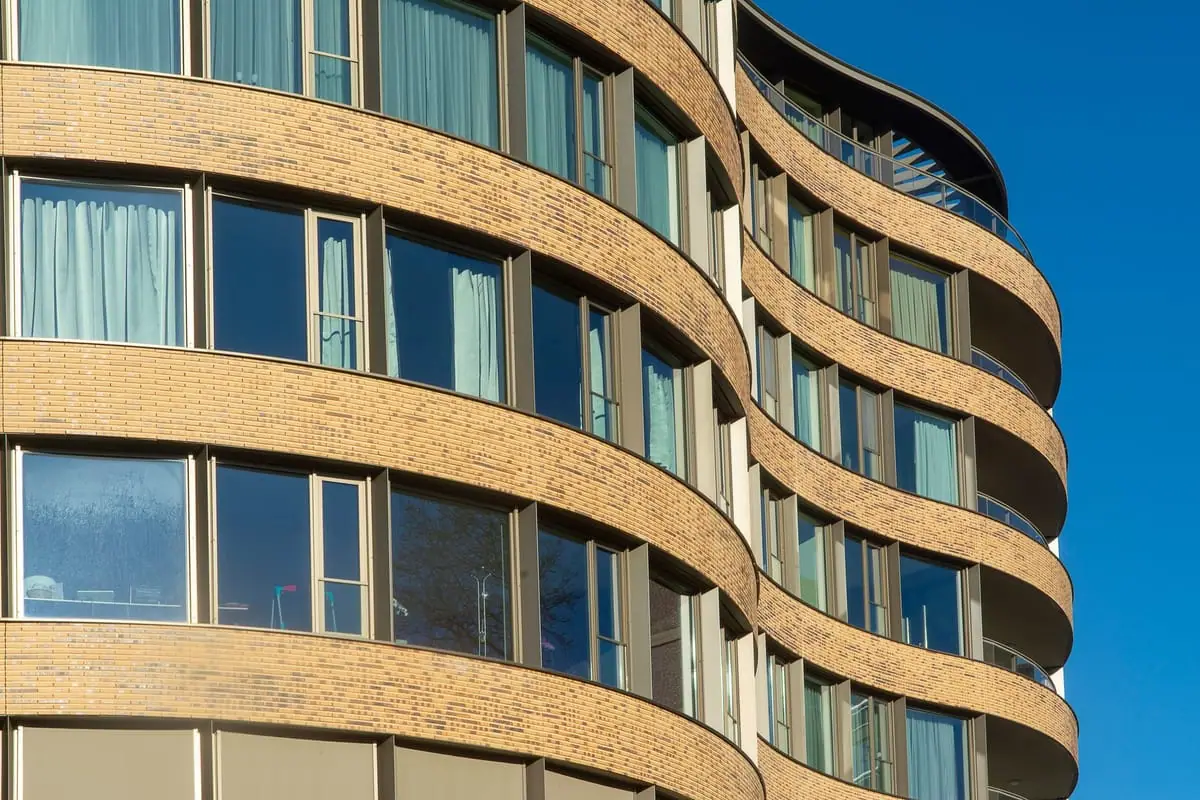
A bow window joins four or more equally sized units into a curved, rounded projection. Where a bay makes an angular statement, a bow creates a soft, wraparound arc of glass that floods a room with light from multiple directions. Bows suit both traditional and Victorian-influenced homes and, like bays, require careful structural support, insulation, and roof flashing since they extend beyond the wall.
Benefits of Bow Window Replacement
- Gentle curved arc for a soft, elegant projection
- Panoramic light and views from four or more panels
- Mix fixed and operable units for view plus ventilation
- Standout architectural feature that lifts curb appeal
- Correctly supported and weatherproofed installation
Our Installation Process
Every bow window replacement project follows the same proven, AAMA-standard process — the details that keep water out of your walls and your manufacturer warranty valid.
- Precise field measurement of every opening
- Careful removal of the old window (EPA Lead-Safe on older homes)
- Inspection and prep of the rough opening
- New unit set level, plumb, and square
- Low-expansion insulation and correct flashing
- Interior and exterior sealing, trim, and cleanup
See exactly how window installation works →
What Affects the Cost
Pricing is quoted per project after an in-home measurement. The main factors:
- Window size and quantity
- Frame material (vinyl, wood, fiberglass, aluminum)
- Glass package (Low-E, argon, dual vs. triple pane)
- Insert vs. full-frame installation
- Custom shapes, capping, and permits
Read the full window replacement cost guide →
Bow Window Replacement FAQs
How many windows make up a bow window?
A bow window uses four, five, or six equal-width panels set at shallow angles to form the curve. More panels create a smoother, more rounded arc.
Can I get a window seat with a bow window?
Yes — the interior projection creates a wide ledge that’s ideal for a cushioned window seat or display shelf.