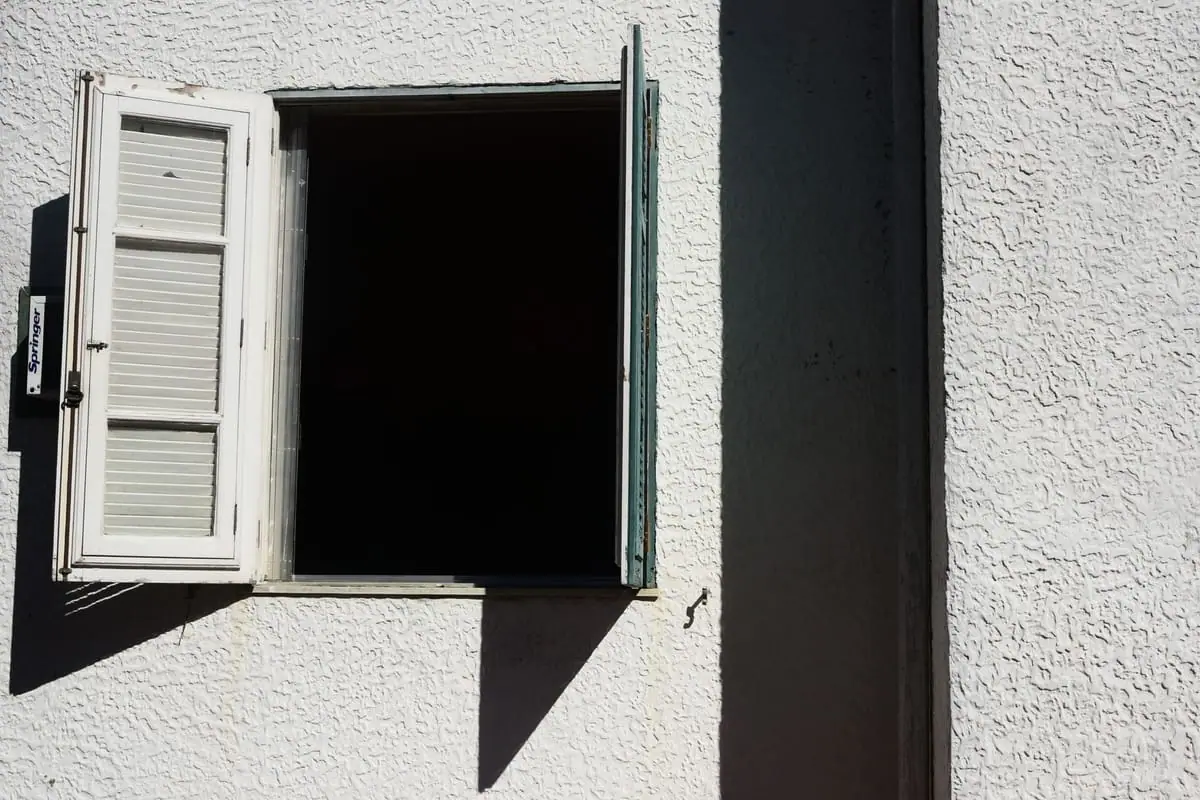
An awning window is hinged at the top and cranks open from the bottom, forming a small “awning” that lets you keep it open during light rain without water coming in. Like casements, awnings press tight against the frame for an excellent air-seal. They’re ideal placed high on a wall for privacy and light, above or below a fixed picture window, or in bathrooms and basements where ventilation matters.
Benefits of Awning Window Replacement
- Ventilate during light rain — the sash shields the opening
- Tight compression seal for strong energy efficiency
- Great for high placements, privacy, and hard-to-reach spots
- Pairs beautifully above or below picture windows
- Crank operation is easy over counters and fixtures
Our Installation Process
Every awning window replacement project follows the same proven, AAMA-standard process — the details that keep water out of your walls and your manufacturer warranty valid.
- Precise field measurement of every opening
- Careful removal of the old window (EPA Lead-Safe on older homes)
- Inspection and prep of the rough opening
- New unit set level, plumb, and square
- Low-expansion insulation and correct flashing
- Interior and exterior sealing, trim, and cleanup
See exactly how window installation works →
What Affects the Cost
Pricing is quoted per project after an in-home measurement. The main factors:
- Window size and quantity
- Frame material (vinyl, wood, fiberglass, aluminum)
- Glass package (Low-E, argon, dual vs. triple pane)
- Insert vs. full-frame installation
- Custom shapes, capping, and permits
Read the full window replacement cost guide →
Awning Window Replacement FAQs
Where are awning windows a good choice?
High on walls for light and privacy, in bathrooms and kitchens for ventilation, in basements, and combined with picture windows. Their rain-shedding design makes them versatile in Georgia’s wet season.
Are awning windows secure?
Yes — their compact size and multi-point locking make them difficult to force, and high placements add natural security.